
Pain Management Marketing That Turns Specialist Search Into Trusted Consultations
Help patients find your pain management clinic, understand the conditions and services you genuinely address, verify specialist trust and location, and move into the right consultation or referral pathway.
Patients Often Search by the Pain Condition Before They Search by the Specialist
Pain management clinics can receive search demand from condition terms, specialist queries, provider referrals and branded searches. The website should connect those pathways to real expertise without implying a diagnosis or which treatment someone needs.
- Build visibility for pain management specialist and clinic searches
- Create substantial condition pages tied to genuine expertise
- Strengthen Local SEO for actual clinic locations
- Support professional referrals and branded search
- Track qualified consultations by source, condition intent and location
Condition pages can explain the clinic’s relevant expertise and consultation process. They should not tell a visitor what condition they have, what procedure they need or what outcome to expect.
From Condition Search or Referral to a Confident Specialist Consultation
The strongest pain clinic website helps a patient verify the specialist, the clinic’s real service scope and the practical next step before contact.
The journey may begin with a pain-related condition, pain specialist query, clinic name or professional recommendation.
The visitor reviews the clinic’s genuine areas of focus, specialists, locations and consultation process.
Real professional information, reputation, referral guidance and local details reduce uncertainty.
The page moves the visitor into the right specialist consultation or referral-support pathway.
Build Condition Pages Around Genuine Expertise, Not Symptom Guessing
Condition-led SEO can be valuable for pain management clinics because patients frequently search the issue before the provider. The safest structure connects useful condition education to the clinic’s real services and consultation path.
Create pages only where the clinic has genuine relevance and can publish substantial, provider-reviewed content that supports an informed consultation decision.
Connect each condition page to the real specialist or service pathway that exists at the clinic, without implying treatment suitability.
Avoid pages that tell a visitor what condition they have based on where or how they feel pain.
Patients Need Specific Specialist and Process Information Before They Contact the Clinic
Pain-related decisions can involve uncertainty, prior referrals or previous care experiences. Trust should come from real specialist information, clear services, accurate locations and a transparent consultation process.
- Use real specialist biographies and professional information where appropriate
- Explain genuine clinic services without promising results
- Keep location, referral and contact information current

Connect Condition Intent to Specialists, Genuine Services and Real Locations
Pain clinic websites can become fragmented if every symptom, body area or procedure keyword gets its own thin page. Strong architecture maps real search intent to genuine expertise and consultation pathways.
- Pain management clinic and specialist intent
- Meaningful condition content
- Real service and procedure information where genuinely offered
- Specialist and team profiles
- Real locations, referral and consultation pathways
Specialist Search Still Needs Strong Local Proof
Patients may search for a pain management specialist near them, compare Maps listings and then validate the specialist or clinic website before making contact. Local SEO should connect location, specialist and service information clearly.
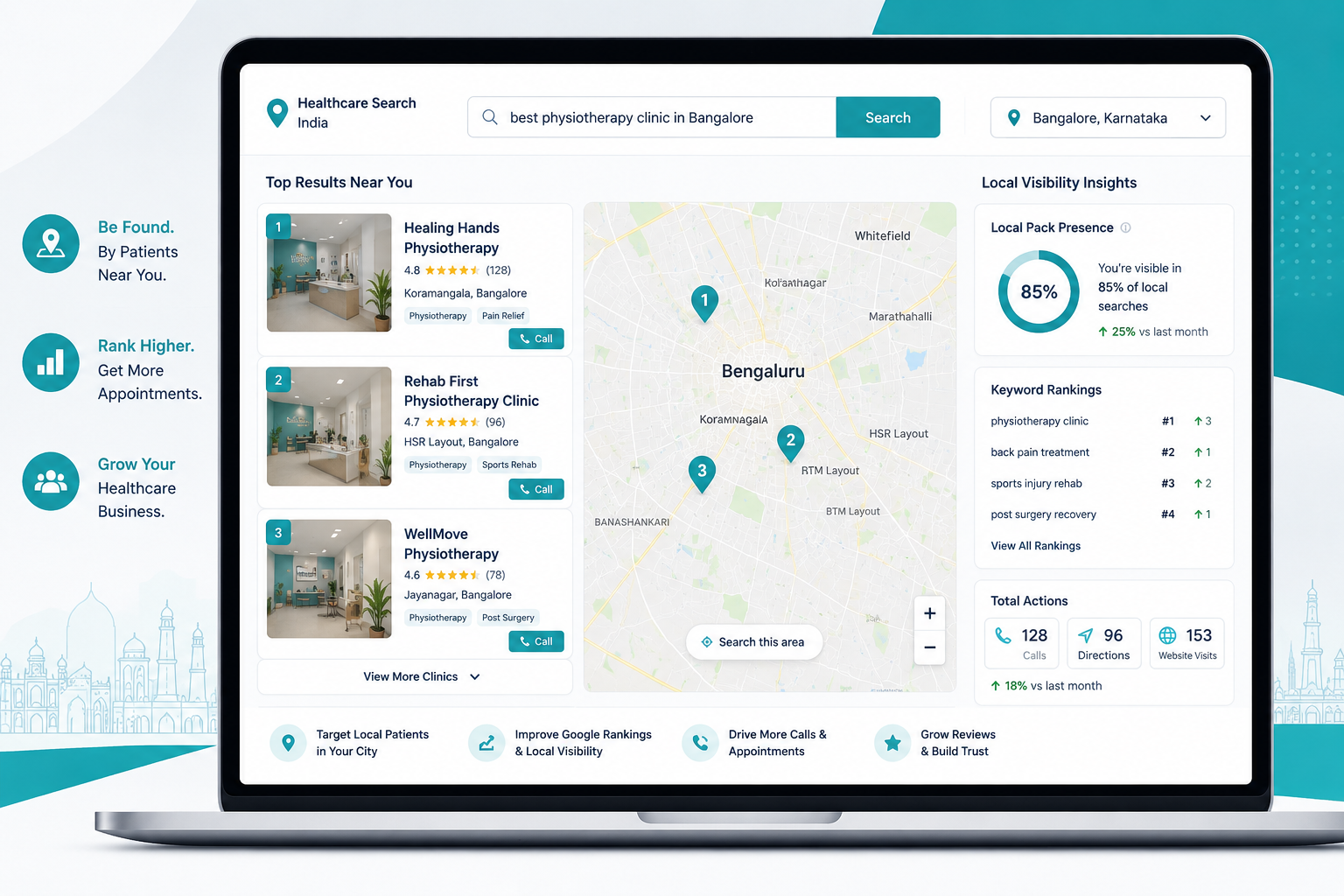
Do Not Make Local Search Visitors Rebuild the Decision From Scratch
A visitor arriving from Maps should quickly confirm the same clinic location, specialist and relevant services they expected. The page should continue the decision journey rather than restart it.
- Connect each profile to the correct clinic location page
- Link location pages to genuine specialist and condition content
- Track calls, directions and consultation actions by location
Professional Referrals Often Lead to Specialist and Clinic Search
Patients may receive a referral and then independently search the specialist, clinic, condition or service before booking. Strong digital information should reinforce the referral and make the next step clear.
Prioritize Condition SEO, Specialist Trust, Local Visibility and Consultation Conversion
The most useful channels are the ones closest to how patients actually find pain management care: condition search, specialist discovery, local validation and referrals.
Healthcare SEO
Build visibility for pain management specialists, clinics, genuine conditions and service searches.
Healthcare SEO →Local SEO
Strengthen real clinic locations, Maps visibility, calls, directions and local specialist discovery.
Local SEO →Medical Website Design
Organize conditions, specialists, referrals and consultation actions into clear patient journeys.
Medical Website Design →Reputation Management
Support genuine trust across local, branded and referral-driven search.
Reputation Management →Analytics + Tracking
Measure consultations, calls, referral-influenced demand and condition-level search intent by source.
Analytics & Tracking →Make the First Specialist Conversation Easy to Understand
A pain management clinic should make it clear how a new patient can enquire, whether a referral path exists and what practical contact route should be used. The website should not turn marketing forms into clinical intake.
Make Specialist and Condition Relevance Clear Before Asking for Contact
A strong pain management page should help the visitor understand the clinic, specialist, condition relevance and next step before they complete an enquiry.
- Clear specialist and clinic positioning
- Substantial genuine condition pages
- Specific specialist and service information
- Visible consultation and referral paths
- Simple privacy-aware marketing forms
- Symptom content that implies diagnosis
- Thin pages for every body area or condition keyword
- Specialists disconnected from relevant services
- Referral information hidden or incomplete
- General forms asking for sensitive clinical detail too early
Use Paid Search Around Clear Pain Specialist and Clinic Intent
Google Ads can support high-intent pain management specialist and clinic searches when the service, location and landing page match. Avoid symptom-heavy ad groups that imply diagnosis or a specific treatment need.
Measure Source, Condition Intent, Location and Qualified Consultations
Pain management reporting should connect organic, local, referral and paid demand to consultations while minimizing sensitive health information in analytics and advertising platforms.
A Pain Management Marketing Process Built Around Condition and Specialist Intent
Review pain specialist, clinic, condition, branded, local and referral-driven search behavior.
Connect genuine condition content, specialists, services and real locations to purposeful pages.
Strengthen SEO, Local SEO, reputation, referral information and conversion.
Track source, condition intent, specialist, location, calls and useful enquiries.
Explore Related Specialty and Healthcare Marketing
Strengthen Pain Specialist Discovery, Trust and Consultation Conversion
Pain Management Marketing FAQs
Find the Gaps Between Condition Search, Specialist Trust and Qualified Consultations
Tell us about your pain management clinic and we can review condition SEO, specialist visibility, Local SEO, referral pathways, consultation conversion and tracking.