
Home Care Marketing That Helps Families Find Trusted Local Caregivers
Help families and caregivers discover your non-medical home care provider, understand the support you genuinely offer, verify local trust and move into a clear call or family enquiry path.
Families Are Choosing People They May Welcome Into the Home
Non-medical home care is a trust-heavy local service. Families want to know who the provider is, what practical support is available, where caregivers can serve and how the organization selects and manages its team.
- Build strong visibility for home care and senior home care searches
- Make real service areas easy to understand
- Use caregiver and organization information as trust assets
- Support reviews, referrals and branded provider search
- Track qualified family leads by source, service and area
Describe the non-medical services the provider genuinely offers, how availability works and how families can ask questions. Do not imply clinical suitability or treatment outcomes.
From Home Care Search to the First Family Conversation
A strong home care website helps families compare practical support, caregiver trust and service availability before they submit personal information.
Search may begin with home care, senior home care, a provider name, Maps or a referral.
The family checks genuine services, service areas, scheduling context and how the provider works.
Team information, reviews, process transparency and communication shape confidence.
The website moves the family into a consultation or availability conversation with minimal friction.
Make the People and Process Behind the Service Easier to Understand
Families often judge a home care provider by how clearly it explains caregiver standards, communication and the way support is coordinated.
Explain real caregiver roles, qualifications or screening processes only where the provider can verify them accurately.
Show how families can ask questions, discuss availability and understand the provider’s non-medical support model.
Use genuine reviews and professional responses to reinforce trust without inventing testimonials or claims.
Local Search Is Often the First Filter for Families Comparing Providers
Families may search by city, area, senior home care, nearby providers or a recommendation. Local SEO should clarify both the real office location and the wider area where the provider can deliver non-medical support.
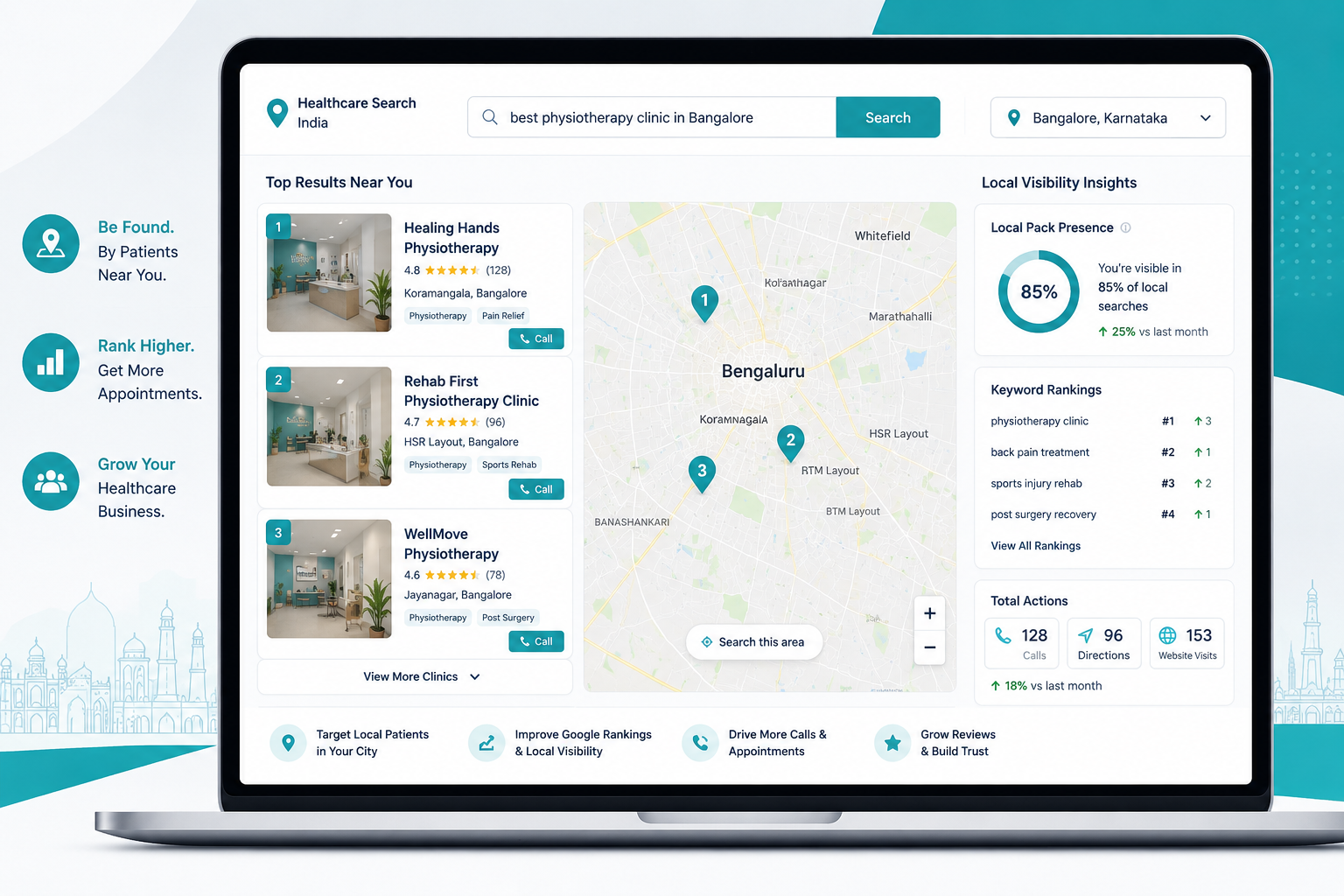
Local Search Should Continue Into a Clear Home Care Enquiry Journey
A family who arrives from Maps should not have to hunt for coverage, services or contact information. The landing page should continue the exact local decision journey.
- Connect local profiles to the correct provider or location page
- Keep service and coverage information consistent
- Track calls and enquiries by local intent
Build Around Real Services, Service Areas and Family Questions
Home care SEO can become repetitive when every city, support task and keyword variation gets a separate page. Strong architecture ties each URL to a genuine service or meaningful family decision.
- Home care and senior home care intent
- Meaningful non-medical service pages
- Real office locations and useful service-area information
- Family education and caregiver trust content
- Call, consultation and service-enquiry pathways
Specific Provider Information Matters More Than Generic “Caring” Language
Families want to understand who the organization is, how caregivers are presented, what support is offered, where it is available and how the first conversation works.
- Use real organization and caregiver information
- Keep services, coverage and contact details current
- Use genuine reviews and reputation signals carefully

Prioritize Local SEO, Website Trust, Reputation and Qualified Family Leads
The best channel mix is the one that helps families find the provider locally, understand the service and feel confident enough to start a conversation.
Local SEO
Strengthen real locations, service-area visibility, Maps accuracy, reviews and mobile calls.
Local SEO →Healthcare SEO
Build visibility for home care, senior home care and genuine support-service searches.
Healthcare SEO →Medical Website
Organize services, caregiver trust, service areas and family enquiry paths with less friction.
Medical Website Design →Reputation Management
Support genuine reviews and provider trust across local and branded search.
Reputation Management →Lead Generation + Tracking
Measure qualified family leads by source, service and geographic fit.
Healthcare Lead Generation →Recommendations Often Start the Search, Digital Trust Helps Close the Gap
Families may hear about a home care provider from healthcare professionals, community organizations, friends or relatives and then search the organization before making contact.
Make the First Conversation Easy Without Turning the Form Into Intake
Families usually need to ask about service availability, timing, service area and general fit. The first website conversion should make that conversation easy, not collect detailed personal information.
Make Caregiver Trust and Local Fit Clear Before Asking for the Lead
A qualified home care enquiry starts with clarity around who the provider is, what it offers and whether the geography matches.
- Clear non-medical service positioning
- Useful service-area information
- Specific caregiver and process trust content
- Direct call and family consultation CTAs
- Simple privacy-aware forms
- Generic “caring” claims with little substance
- Thin city pages created only for SEO
- Unclear caregiver or service information
- One generic form for every family journey
- Forms asking for too much personal information too early
Use Paid Search Around Clear Local Home Care Intent
Paid search can support families actively looking for home care or senior home care providers. Campaigns should stay tightly aligned to real service areas and family-intent landing pages.
Measure Source, Service Intent, Geographic Fit and Lead Quality
Home care reporting should connect acquisition source, service or area intent, contact action and whether the lead matched the provider’s actual offer.
A Home Care Marketing Process Built Around Local Trust and Family Lead Quality
Review home care, senior home care, branded, Maps and referral search behavior.
Connect genuine non-medical services, real locations and meaningful service areas to purposeful pages.
Strengthen Local SEO, reputation, family content and call or consultation pathways.
Track source, service intent, area fit and qualified family enquiries.
Explore Related Home-Based Care Marketing
Strengthen Home Care Discovery, Caregiver Trust and Family Lead Generation
Home Care Marketing FAQs
Find the Gaps Between Local Family Search and Qualified Home Care Leads
Tell us about your home care provider and we can review local visibility, caregiver trust, service areas, family enquiry conversion and lead tracking.