Urgent Care Marketing Built for Patients Who Need a Nearby Option Now
Help people find your urgent care center when time matters, then make hours, location, directions, contact options and next steps immediately clear across Google Maps, search results and mobile landing pages.
The Patient May Decide Before Reading More Than a Few Lines
Urgent care search behavior is often driven by proximity, current hours and immediate access. A patient may compare the map pack, glance at reviews, check whether the center is open and choose a route to call or drive within minutes.
If Google shows the wrong hours, the address is inconsistent, the phone number is difficult to tap or the mobile page hides directions, the marketing system can fail even when the center ranks well.
What an Urgent Care Patient Usually Needs to Confirm Quickly
This is not the same research journey as choosing a long-term physician. The page and local profile should prioritize practical information first.
Hours, holiday schedules and other availability information should be consistent wherever patients may check.
Address, map location, directions and local landing-page signals should remove uncertainty.
Call, directions, walk-in information or another available arrival/booking route should be obvious on mobile.
Win the Local Search Moment With Accurate, Actionable Information
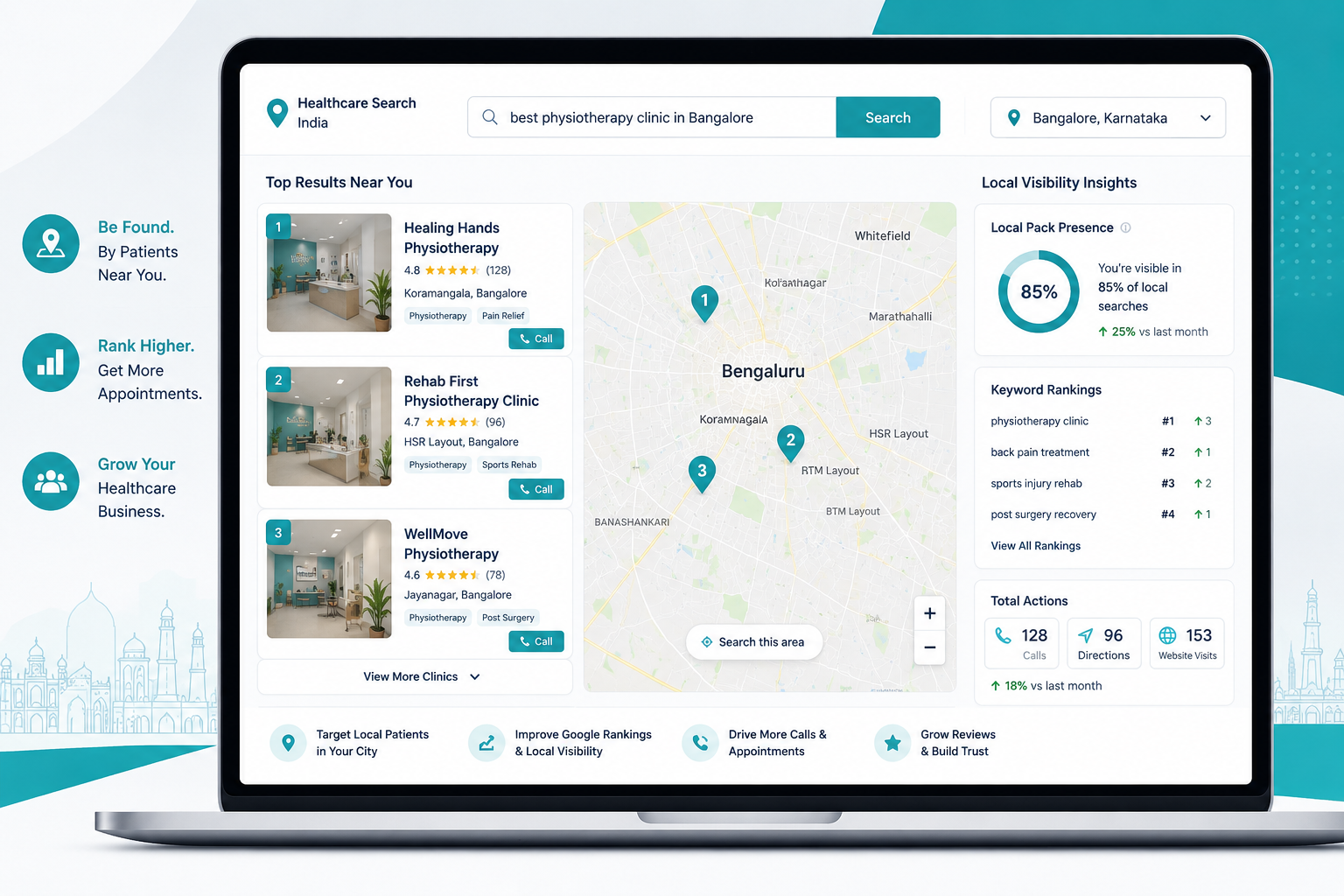
For an “urgent care near me” search, Google Maps can be the main decision surface. The profile and location page should agree on the facts that matter most to a patient deciding where to go.
- Keep current hours and special hours accurate
- Use the correct urgent-care and clinic categories
- Make address and map pin information consistent
- Show a tap-friendly phone number and directions route
- Use genuine reviews and professional responses
- Connect the profile to a useful location-focused landing page
Treat Hours, Directions and Arrival Information as Conversion Content
These details are not administrative footnotes for urgent care. They are part of the marketing and conversion experience because they directly affect whether a nearby patient can act.
Build Pages Around Real Local and Visit Intent, Not Keyword Variations
An urgent care website does not need a separate thin page for every “near me,” city or minor wording variation. The structure should reflect real locations, real visit needs and genuine service categories.
- Urgent care near me
- Urgent care open now
- Walk-in urgent care in the local area
- Urgent care location searches
- Selected service searches where the center genuinely provides them
Urgent Care Needs a Different Channel Priority Than Ongoing-Care Practices
Local SEO and high-intent search usually deserve more emphasis than broad awareness activity because many urgent-care decisions happen close to the moment of need.
Local SEO
Prioritize Maps visibility, accurate hours, location relevance, directions, calls and consistent center information.
Local SEO for Doctors →Healthcare SEO
Build useful organic visibility for real urgent-care locations and meaningful service intent without doorway-style location pages.
Healthcare SEO →Google Ads
Capture selected immediate-intent searches with tight geography, clear location relevance and mobile-first conversion actions.
Google Ads for Clinics →Website Conversion
Keep the urgent-care landing experience fast, clear and focused on hours, location, directions, phone and visit information.
Medical Website Design →Tracking
Measure calls, direction clicks, forms or booking actions where appropriate so local and paid performance can be evaluated properly.
Analytics & Tracking →Design for a Patient Who May Be Searching From a Car, Office or Home Right Now
Urgent-care mobile UX should remove decisions, not add them. The most important information should appear before long explanations or decorative content.
Paid Search Works Best When Geography and Immediate Intent Are Tightly Controlled
Urgent care can have strong paid-search intent, but broad targeting can waste budget quickly. Campaigns should stay close to real center locations and real visit behavior.
Measure Actions That Reflect Immediate Local Demand
Urgent-care reporting should not stop at sessions or impressions. The useful question is whether local visibility and paid search are producing calls, direction actions and other visit-intent conversions.
A Practical Urgent Care Marketing Process
Check locations, hours, profiles, map data, calls and landing pages.
Identify the local and time-sensitive searches that matter most.
Make hours, directions and contact actions easier to use.
Build Local SEO, organic visibility and paid search where useful.
Track calls, directions and other actions that support real visits.
Explore Other Medical Practice Marketing Strategies
Strengthen the Search and Conversion System Around Each Urgent Care Location
Urgent Care Marketing FAQs
Find the Gaps Between Immediate Local Searches and Real Visit Intent
Tell us about your urgent care locations and we can start by reviewing Maps visibility, hours accuracy, local search intent, mobile conversion, Google Ads and visit-focused tracking.