
Medical Marketing That Helps Local Practices Turn Search Demand Into Patient Enquiries
Build a practical patient acquisition system for primary care, family medicine, internal medicine, urgent care and walk-in clinics across search visibility, Google Maps, website trust and appointment conversion.

Patient Journey + Medical Practice Pages
One compact view of how patients move toward an appointment and which business-type pages support this pillar.
Make the Practice Easy to Find, Easy to Trust and Easy to Contact
General medical practices compete on more than rankings. Patients may also compare proximity, physician information, services, hours, reviews, insurance or payment details and how easily they can take the next step.
- Reach people searching for a doctor or clinic nearby
- Make physician and practice information easy to verify
- Match important services to real patient search intent
- Reduce friction between search, website visit and appointment enquiry
- Track meaningful patient actions instead of traffic alone
For primary care, family medicine and walk-in services, much of the decision can happen before a patient reads a long page. Google Maps visibility, hours, distance, physician trust, reviews and a clear contact route can strongly influence the next step.
How Patients Choose a General Medical Practice
A new primary care patient may research carefully, while an urgent care patient may prioritize distance, opening hours and immediate contact. The marketing system should reflect both types of behavior.
Routine care, a new physician, a specific service or a time-sensitive health concern.
The patient compares nearby practices, Maps listings, services and availability.
They review physicians, reviews, website information and practical visit details.
They call, use a form, request a callback or continue to an available booking route.
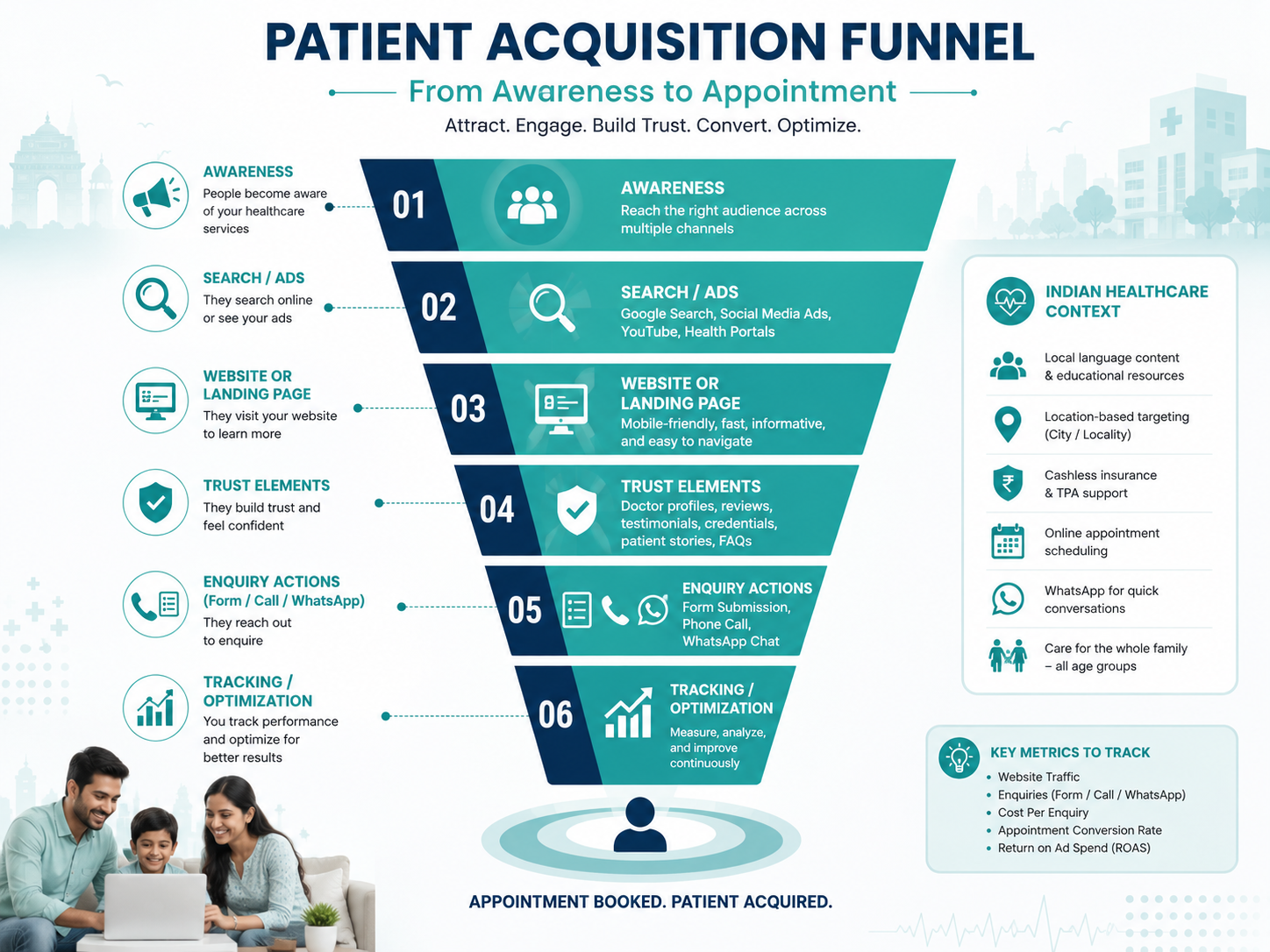
Search Visibility Should Connect to a Real Appointment Path
Ranking a page or generating a click is only part of the system. The practice also needs accurate local information, useful service content, physician trust, clear contact options and enough tracking to understand what patients do next.
- SEO supports discovery for services and physician-related searches
- Local SEO supports nearby practice and Google Maps demand
- Google Ads can capture selected high-intent searches
- The website turns interest into calls, forms and appointments
- Analytics connects the marketing source with meaningful actions
Marketing Strategy Should Change With the Type of Medical Practice
Primary care, internal medicine and urgent care may use some of the same channels, but their patient urgency, search behavior and conversion paths are not identical.
Build recurring local visibility for patients looking for an ongoing physician relationship.
Explore Primary Care → Family Medicine MarketingSupport individual and household care searches with strong local and physician trust signals.
Explore Family Medicine → Internal Medicine MarketingReach adult patients researching physician-led ongoing care and local medical practices.
Explore Internal Medicine → Urgent Care MarketingPrioritize immediate local intent, hours, directions, availability and call conversion.
Explore Urgent Care → Walk-In Clinic MarketingMake convenience, location, services and same-day access easy to understand.
Explore Walk-In Clinics →Focus on the Channels That Support Real Patient Discovery and Appointments
Medical practices do not need every marketing channel equally. For many local practices, search visibility, Google Maps, website clarity and reliable enquiry tracking should come first.
Healthcare SEO
Build organic visibility for the practice, physicians, core medical services and useful patient questions.
Healthcare SEO →Local SEO
Strengthen Google Maps visibility, practice information, local relevance and patient actions for nearby searches.
Local SEO for Doctors →Google Ads
Use paid search selectively for high-intent services, new-patient demand or immediate local searches.
Google Ads for Clinics →Medical Website Design
Give patients clear physician, service, location and appointment information without burying the next step.
Medical Website Design →Analytics + Tracking
Measure calls, forms, key appointment actions and important marketing sources where technically possible.
Analytics & Tracking →Organize the Website Around Real Medical Search Intent
A practice should not create a page for every keyword variation. The better approach is to map meaningful patient intent to useful pages with enough depth to deserve their own URL.
- Practice and local provider intent
- Physician profile and trust intent
- Core medical service intent
- Urgent or same-day visit intent where relevant
- Location, hours and appointment intent
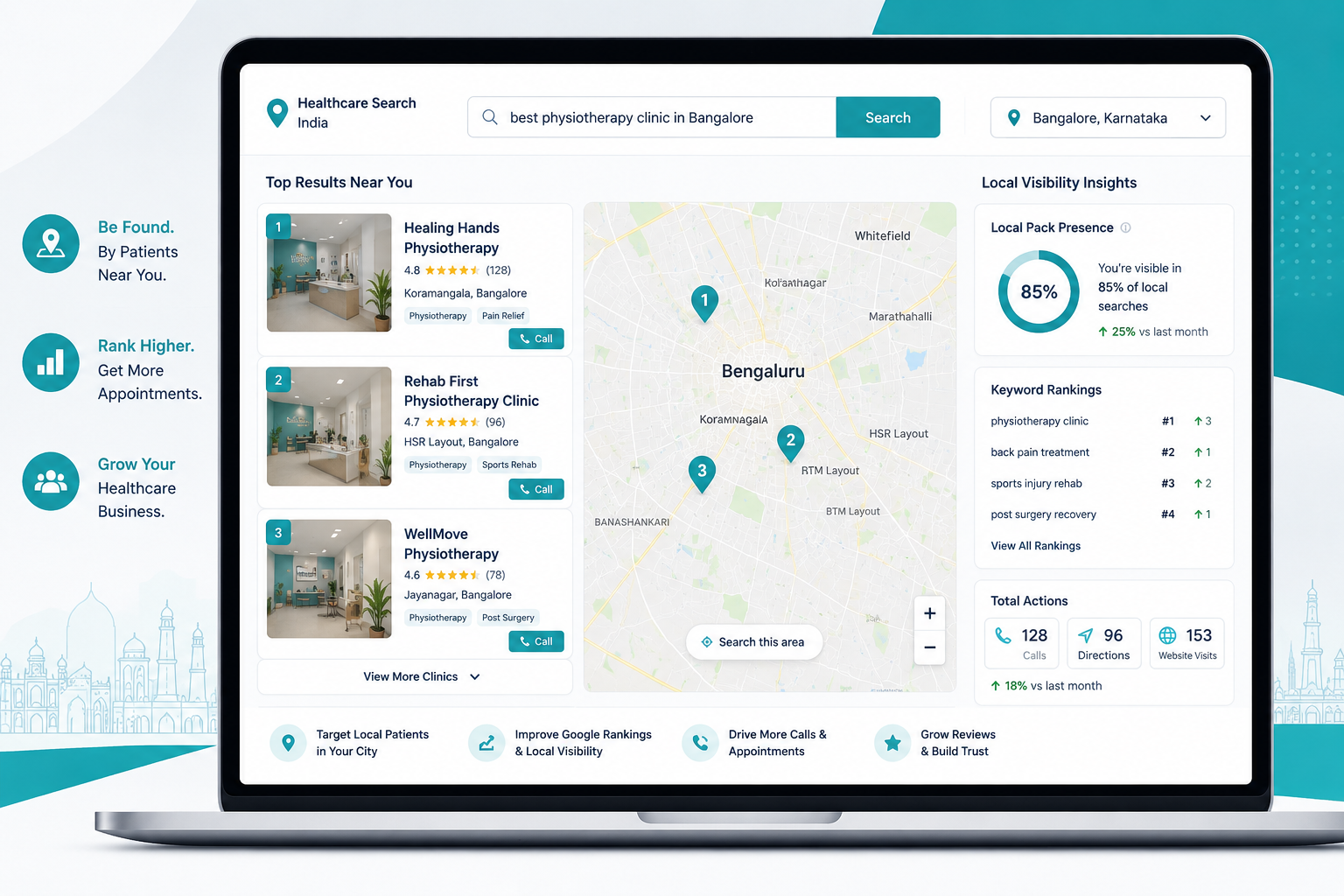
Google Maps Often Sits Close to the Appointment Decision
For local medical practices, the Google Business Profile and website should reinforce the same real information. Patients should not have to guess where the practice is, when it is open, which physicians work there or how to contact it.
- Accurate practice name, address, hours and contact information
- Relevant categories and services without keyword stuffing
- Real physician, clinic and location photography
- Genuine review activity and professional responses
- Strong connection between Maps listing and location page
Use Google Ads Where Search Intent and Appointment Capacity Justify It
Paid search can support new-patient acquisition, urgent demand and selected medical services, but it should not be treated as a substitute for weak local visibility or an unclear website.
Separate practice, urgent, service and location intent where needed. Review actual search terms, use relevant landing pages, control irrelevant traffic and measure appointment actions instead of clicks alone.
Patients Should Not Have to Work Hard to Understand the Practice
A medical website should answer practical questions quickly while giving enough depth for patients who want to evaluate physicians, services and the practice before making contact.
- Clear physician and practice information
- Useful medical service pages
- Visible hours, location and contact options
- Real reviews and trust signals used responsibly
- Simple mobile appointment and call actions
- Generic clinic copy with little physician information
- Important services hidden inside one long page
- Different hours or addresses across platforms
- Overpromotional claims instead of practical information
- Forms and calls that are not tracked or followed up
Connect Marketing Activity With Meaningful Patient Enquiries
Reporting should help the practice understand where patient demand comes from and which channels are producing useful appointment opportunities.
A Practical Medical Marketing Process
Review search, Maps, website, services, tracking and patient conversion paths.
Identify the services, locations and patient journeys that deserve attention first.
Improve local signals, pages, trust information and conversion tracking.
Build SEO, local visibility and paid search where each one supports a clear goal.
Use enquiry and appointment data to decide what should change next.
Build the Medical Marketing System Around the Channels You Actually Need
Explore Marketing Strategies Across the HealthDigital Healthcare Pillars
These links follow the planned HealthDigital healthcare architecture so the site is already connected as each new pillar is published.
Medical Marketing FAQs
Find the Gaps Between Local Patient Demand and Your Practice Enquiries
Tell us about your medical practice and we can start by reviewing your search visibility, Google Maps presence, physician and service pages, website conversion and enquiry tracking.