
Rehabilitation Marketing That Connects Local Search, Referrals and Therapy Enquiries
Help patients and caregivers find the right rehabilitation provider, understand the therapy services you genuinely offer, verify trust and location, and move into a clear appointment, consultation or referral pathway.
Provider Choice Depends on Service Fit, Trust and Practical Access
Therapy and rehabilitation providers often serve patients over multiple visits, so the decision can involve proximity, schedule, referral requirements, therapist trust and the exact service being researched. Marketing should make those practical decisions easier.
- Build visibility for rehabilitation providers and genuine therapy services
- Strengthen Local SEO for real clinics and service locations
- Support physician, hospital and community referrals
- Explain real therapy and rehabilitation pathways clearly
- Track appointments and qualified enquiries by service and source
Service and condition content can help people understand what the provider offers, but it should not diagnose an issue, determine clinical suitability or promise recovery outcomes.
From Search or Referral to the Right Therapy Conversation
The strongest rehabilitation website helps the patient or caregiver verify the provider, service, location and practical next step before booking.
The journey starts with a rehabilitation query, therapy service, clinic name, local search or professional recommendation.
The visitor reviews real services, therapist information, location, schedule and practical contact options.
Specific provider information, genuine reputation and clear referral or appointment steps reduce uncertainty.
The website moves the visitor into the right appointment, consultation or service-enquiry pathway.
Different Rehabilitation Providers Need Different Marketing Emphasis
The page should reflect the provider’s actual service model rather than treating every therapy clinic or rehabilitation center as the same kind of business.
Local SEO, repeat-visit convenience, therapist trust, service pages and easy scheduling often matter most.
Clear service architecture becomes important so patients and caregivers reach the correct rehabilitation pathway quickly.
Professional referrals, branded search, provider validation and administrative referral information may influence more of the acquisition journey.
Make Therapists, Services and the Rehabilitation Process Easy to Verify
Patients and caregivers need specific information about who provides care, which services are genuinely available, where visits happen and what the first contact process looks like.
- Use real therapist and provider information where appropriate
- Keep location, schedule and service details current
- Use genuine reviews and factual referral information

Build Around Real Services, Conditions, Providers and Locations
Rehabilitation sites can become repetitive if every symptom, body area, service variation or city gets its own thin page. Strong architecture maps genuine patient intent to real services and provider expertise.
- Rehabilitation provider and clinic intent
- Meaningful therapy and rehabilitation service pages
- Condition or recovery-topic content where genuinely relevant
- Therapist and team information
- Real locations, referral and appointment paths
Repeat Visits Make Local Search and Practical Access Especially Important
For many rehabilitation services, patients may attend more than once. Location, directions, phone access, opening hours and service availability can therefore influence whether a provider is practical to choose.
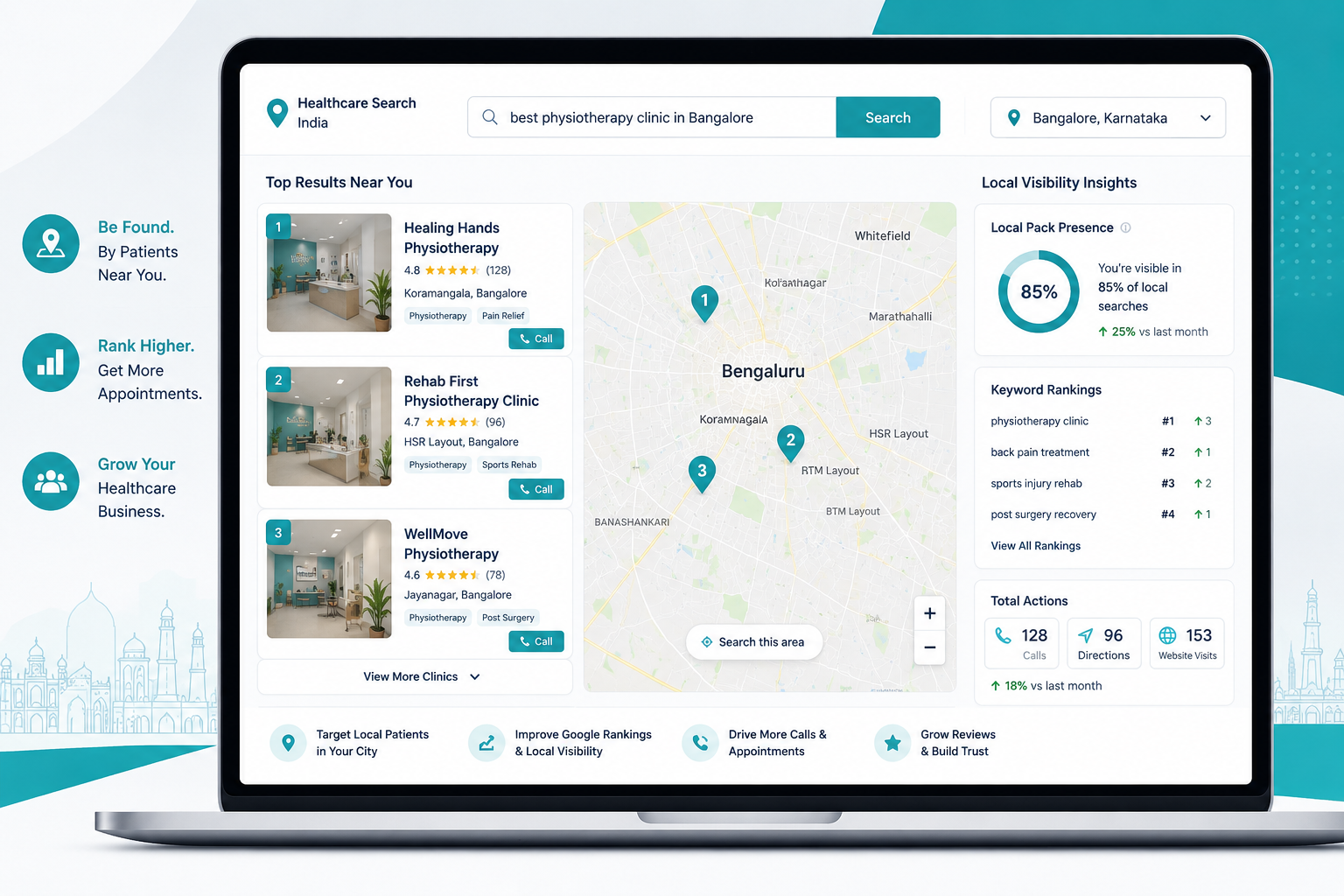
Continue the Same Rehabilitation Journey After the Local Search Click
A visitor arriving from Maps should quickly confirm the location, service and provider information they expected. The page should continue the decision journey instead of sending them back to a generic homepage.
- Connect each local profile to the correct rehabilitation location page
- Link real locations to genuine service and therapist information
- Track calls, directions and appointments by location
Professional Referrals Often Become Branded Provider Search
A physician, hospital, specialist or community professional may introduce the rehabilitation provider, but the patient or caregiver often searches the provider afterward. Strong digital information should reinforce the referral and simplify the next step.
Prioritize Search, Local Visibility, Website Clarity and Qualified Enquiries
The most relevant channels are the ones closest to how rehabilitation providers are actually discovered: service research, local search, professional referrals and direct provider validation.
Healthcare SEO
Build visibility for rehabilitation providers, genuine therapy services, recovery topics and branded searches.
Healthcare SEO →Local SEO
Strengthen real clinic locations, Maps visibility, directions, calls and local service discovery.
Local SEO →Medical Website Design
Organize services, therapists, referrals, locations and booking actions into clear patient journeys.
Medical Website Design →Reputation Management
Support genuine trust across local, branded and referral-driven provider research.
Reputation Management →Analytics + Tracking
Measure appointments, calls, directions, referral-influenced demand and qualified enquiries by source.
Analytics & Tracking →Match the First Contact Path to the Rehabilitation Service
Some rehabilitation providers use direct appointment booking, some start with a consultation or phone call and others rely on referral workflows. The website should reflect the real service process.
Make Service, Provider and Location Fit Clear Before Asking for Contact
A strong rehabilitation page should help the visitor understand whether the provider offers the service they are researching, where it is available and how to make the first contact.
- Clear rehabilitation and therapy positioning
- Substantial genuine service pages
- Specific therapist and team information
- Accurate location and service availability
- Visible appointment, call and referral paths
- Generic therapy claims with little service detail
- Thin pages for every symptom or body-area keyword
- Unclear which provider or location offers which service
- Referral information hidden or incomplete
- General forms asking for sensitive clinical detail too early
Use Paid Search Around Clear Rehabilitation and Therapy Intent
Google Ads can support high-intent provider and service searches when the landing page, geography and service genuinely match. Broad symptom campaigns can create weak traffic and should be handled carefully.
Measure Source, Service Intent, Location and Qualified Actions
Rehabilitation reporting should connect organic, local, referral and selected paid demand to useful appointments and enquiries while minimizing sensitive clinical information in marketing systems.
A Rehabilitation Marketing Process Built Around Service and Referral Demand
Review rehabilitation, therapy service, branded, local and referral-driven search behavior.
Connect genuine rehabilitation services, therapists and real locations to purposeful pages.
Strengthen SEO, Local SEO, reputation, referral information and website conversion.
Track source, service intent, location, calls, appointments and referral-influenced demand.
Explore Related Healthcare Marketing Categories
Strengthen Rehabilitation Discovery, Trust and Qualified Enquiries
Rehabilitation Marketing FAQs
Find the Gaps Between Rehabilitation Search, Referrals and Qualified Enquiries
Tell us about your rehabilitation provider and we can review service visibility, Local SEO, referral pathways, trust, website conversion and tracking.