Rehabilitation Center Marketing Built Around Programs, Referrals and Trust
Help patients, families and referring professionals understand your rehabilitation center, discover the programs you genuinely provide, verify the team and process, and move into the right consultation or service enquiry.
People Are Evaluating a Program, a Team and a Care Setting at the Same Time
A rehabilitation center is usually a broader decision than choosing a single therapist. Patients and families may compare programs, disciplines, professionals, locations, referral requirements and practical access before making contact.
- Build visibility for rehabilitation center and genuine program searches
- Explain real rehabilitation programs and service models clearly
- Support hospital, specialist and community referrals
- Strengthen trust with real team and center information
- Track qualified enquiries by program, source and location
Marketing pages can describe real programs, professionals and referral steps. They should not determine eligibility, predict recovery or recommend a specific rehabilitation plan.
From Referral or Program Research to the Right Rehabilitation Conversation
A strong center website helps families and patients understand the provider before they are asked to enquire.
The journey begins with a professional recommendation, center name, local search or program research.
The visitor reviews genuine programs, therapy disciplines, professionals, location and access information.
Real team information, reputation and clear referral or intake steps help the decision feel more manageable.
The center routes the person into the appropriate first contact without making a clinical determination online.
Build Search Visibility Around Genuine Rehabilitation Programs
Program pages can be a major acquisition asset when they reflect real services and provide enough detail for patients, families and referral partners to understand what the center actually offers.
Create dedicated pages for meaningful rehabilitation programs or service categories that the center genuinely provides.
Explain how referring professionals can identify the right administrative contact and confirm program availability without making clinical promises.
Avoid building separate pages for every diagnosis, symptom, recovery phrase or city when the content would be repetitive.
Families Need to See the Real People and Process Behind the Center
Trust should come from specific information about the rehabilitation team, real programs, setting, location, referral process and first contact rather than broad quality claims.
- Use real rehabilitation professionals and team information
- Keep program, location and intake details current
- Use genuine reputation signals without manufacturing proof

Connect Program Search to Teams, Real Services, Locations and Referral Paths
Large rehabilitation sites can become fragmented when every condition, therapy, program and location gets a thin page. Strong architecture organizes genuine services around the visitor’s actual decision.
- Rehabilitation center and branded-center intent
- Meaningful program and service pages
- Therapy discipline and team information
- Real center locations and practical access
- Referral, consultation and service-enquiry paths
Local Search Should Confirm the Real Center and Program Availability
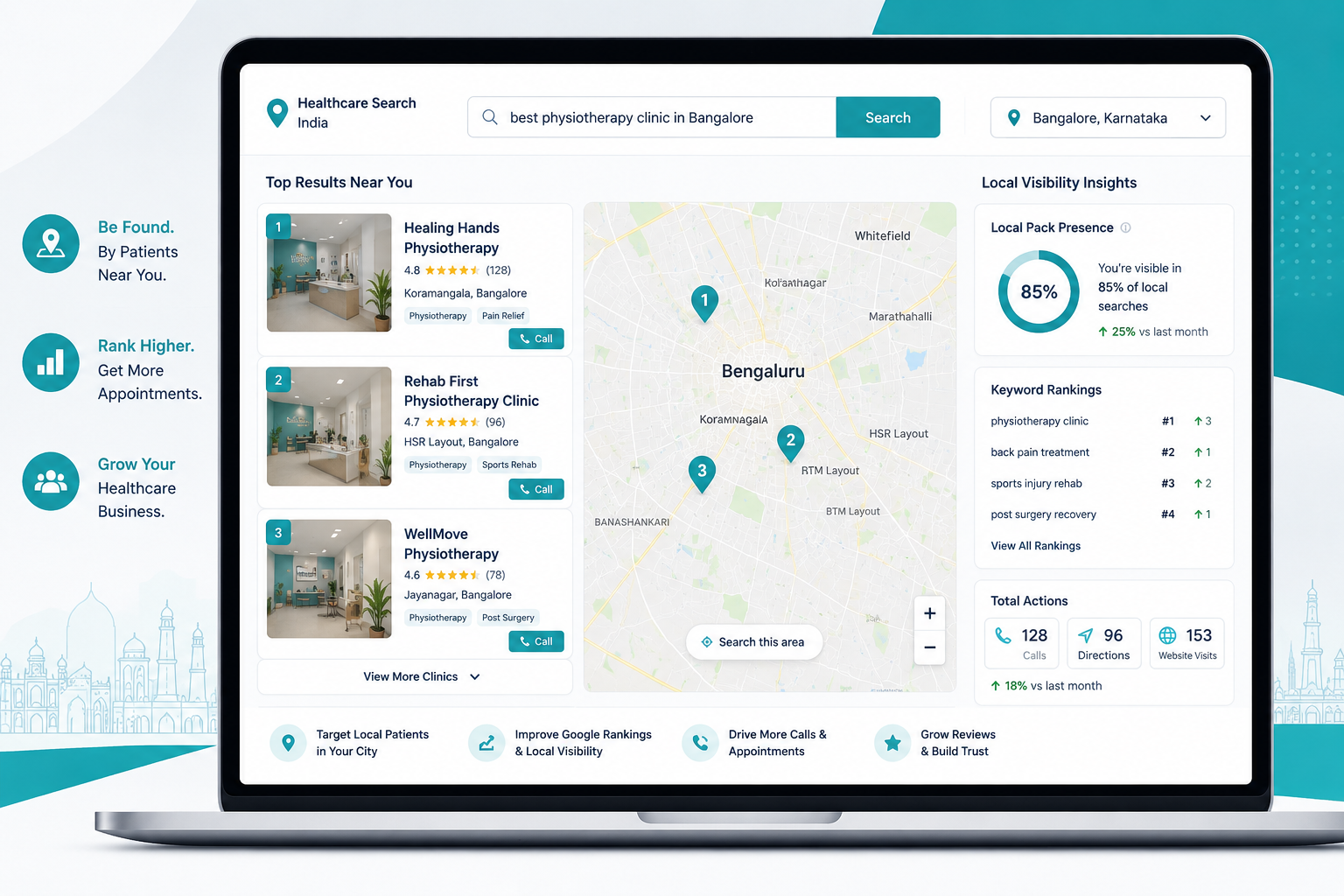
Location can strongly influence rehabilitation decisions, especially when visits are repeated or family involvement matters. Maps and local pages should accurately reflect where services and programs are available.
Do Not Make Families Rebuild the Decision After a Local Search Click
A visitor who searched for a rehabilitation center or program should land on a page that confirms the same center, services and next step they expected.
- Connect each local profile to the correct center page
- Link center pages to genuine program information
- Track calls, directions and enquiry actions by location
Hospital and Specialist Referrals Often Become Branded Center Search
A hospital, physician, specialist or care team may introduce the rehabilitation center, but patients and families often search the center afterward. Strong digital information should reinforce that recommendation.
Prioritize Program Visibility, Referral Trust, Website Clarity and Qualified Enquiries
The most useful channels are the ones closest to how rehabilitation centers are evaluated: program research, branded search, local validation and professional referral pathways.
Healthcare SEO
Build visibility for rehabilitation center, program, service and branded searches.
Healthcare SEO →Local SEO
Strengthen real center locations, Maps visibility, directions, calls and local service discovery.
Local SEO →Medical Website Design
Organize programs, teams, referrals, locations and consultation paths into clear journeys.
Medical Website Design →Reputation Management
Support genuine trust across branded search, family research and professional recommendations.
Reputation Management →Analytics + Tracking
Measure program intent, referral influence, calls, enquiries and qualified contacts by source.
Analytics & Tracking →Match the First Contact to the Rehabilitation Center’s Real Intake Process
Some rehabilitation centers use a consultation, some use an admissions or service enquiry, and some rely heavily on professional referrals. The website should make the right first step obvious.
Make Program, Team and Center Fit Clear Before Asking for Contact
A strong rehabilitation center page should help the visitor understand the center, relevant program, team and location before asking for an enquiry.
- Clear center and program positioning
- Substantial genuine program pages
- Specific therapist and care-team information
- Accurate center-level service availability
- Visible consultation, referral and service-enquiry paths
- Generic claims with little program detail
- Thin pages for every diagnosis or condition keyword
- Unclear which center offers which program
- Referral information hidden or incomplete
- General forms asking for sensitive clinical detail too early
Use Paid Search Around Clear Rehabilitation Center and Program Intent
Google Ads can support high-intent rehabilitation center and genuine program searches when the landing page, geography and service match. Broad symptom-driven campaigns should be handled carefully.
Measure Source, Program Intent, Referral Influence and Qualified Enquiries
Reporting should connect organic, local, referral and selected paid demand to useful consultations and enquiries while minimizing sensitive clinical information in marketing systems.
A Rehabilitation Center Marketing Process Built Around Programs and Referrals
Review rehabilitation center, program, branded, local and referral-driven search behavior.
Connect genuine programs, professionals and real locations to purposeful pages.
Strengthen SEO, Local SEO, reputation, referral information and enquiry paths.
Track source, program intent, referral influence, calls and useful contacts.
Explore Related Rehabilitation and Healthcare Marketing
Strengthen Rehabilitation Center Discovery, Trust and Qualified Enquiries
Rehabilitation Center Marketing FAQs
Find the Gaps Between Program Search, Referrals and Qualified Enquiries
Tell us about your rehabilitation center and we can review program visibility, referrals, trust, Local SEO, conversion and tracking.