
Speech Therapy Marketing That Connects Parents and Adults With the Right Practice
Help parents, caregivers and adults find your speech therapy practice, understand the services you genuinely provide, verify therapist trust and location, and move into the right appointment or consultation path.
Speech Therapy Marketing Has Two Very Different Decision Journeys
A parent researching support for a child and an adult searching for speech-language services may use different language, trust signals and decision criteria. The website should make those paths clear without duplicating thin content.
Parents often want to understand the therapist, age groups served, service focus, location, scheduling and what the first contact looks like before booking.
- Parent-friendly service explanations
- Age-group and location clarity
- Therapist credentials and real experience information
- Simple first-appointment or consultation path
Adults or family caregivers may arrive through a referral, rehabilitation pathway or direct search and need fast clarity around adult services, therapist fit and access.
- Adult-service visibility
- Referral and specialist validation
- Location and appointment practicality
- Clear phone or consultation route
Trust, Age Group and Service Fit Matter Before the Appointment
Speech therapy practices can serve children, adults or both, and the person making the search is not always the person receiving the service. Strong marketing should make the practice model easy to understand before asking for contact.
- Build visibility for speech therapist and speech therapy searches
- Separate child, adult and caregiver journeys where useful
- Create substantial pages for genuine speech-language services
- Strengthen Local SEO for real practice locations
- Support pediatric, medical and rehabilitation referrals
Marketing pages can help visitors understand the practice’s real expertise and process. They should not diagnose speech, language, communication or swallowing conditions or determine which service someone needs.
Organize Search Around Real Speech-Language Services
Dedicated service pages can capture useful search demand when they correspond to genuine services and contain enough practical, provider-reviewed information to help someone choose the practice.
Create meaningful service pages only for child or pediatric speech-language services the practice genuinely provides, with clear age-range and appointment context.
Use dedicated adult-service pages where the practice truly serves adult clients and can explain therapist expertise, access and referral pathways.
Avoid creating a separate page for every speech concern, phrase or symptom variation simply to target keywords.
Parents and Adults Need to See the People Behind the Practice
Real therapist profiles, professional qualifications, age-group experience, service focus and practical appointment information can reduce uncertainty before the first enquiry.
- Use real therapist and professional information
- Connect therapists to genuine service areas
- Keep location, schedule and contact details current

Connect Age Group, Service Intent, Therapists and Real Locations
Speech therapy websites can become repetitive if every age, concern, symptom and location gets its own page. Strong architecture groups genuine services around clear parent and adult journeys.
- Speech therapist and practice intent
- Child and adult service categories where genuinely relevant
- Meaningful speech-language service pages
- Therapist and team information
- Real locations, referrals and appointment pathways
Nearby Search Should Confirm the Right Therapist, Age Group and Service
Parents and adults often compare nearby speech therapy practices on Maps before visiting the website. Local visibility should make the practice location, phone, hours and real service scope easy to verify.
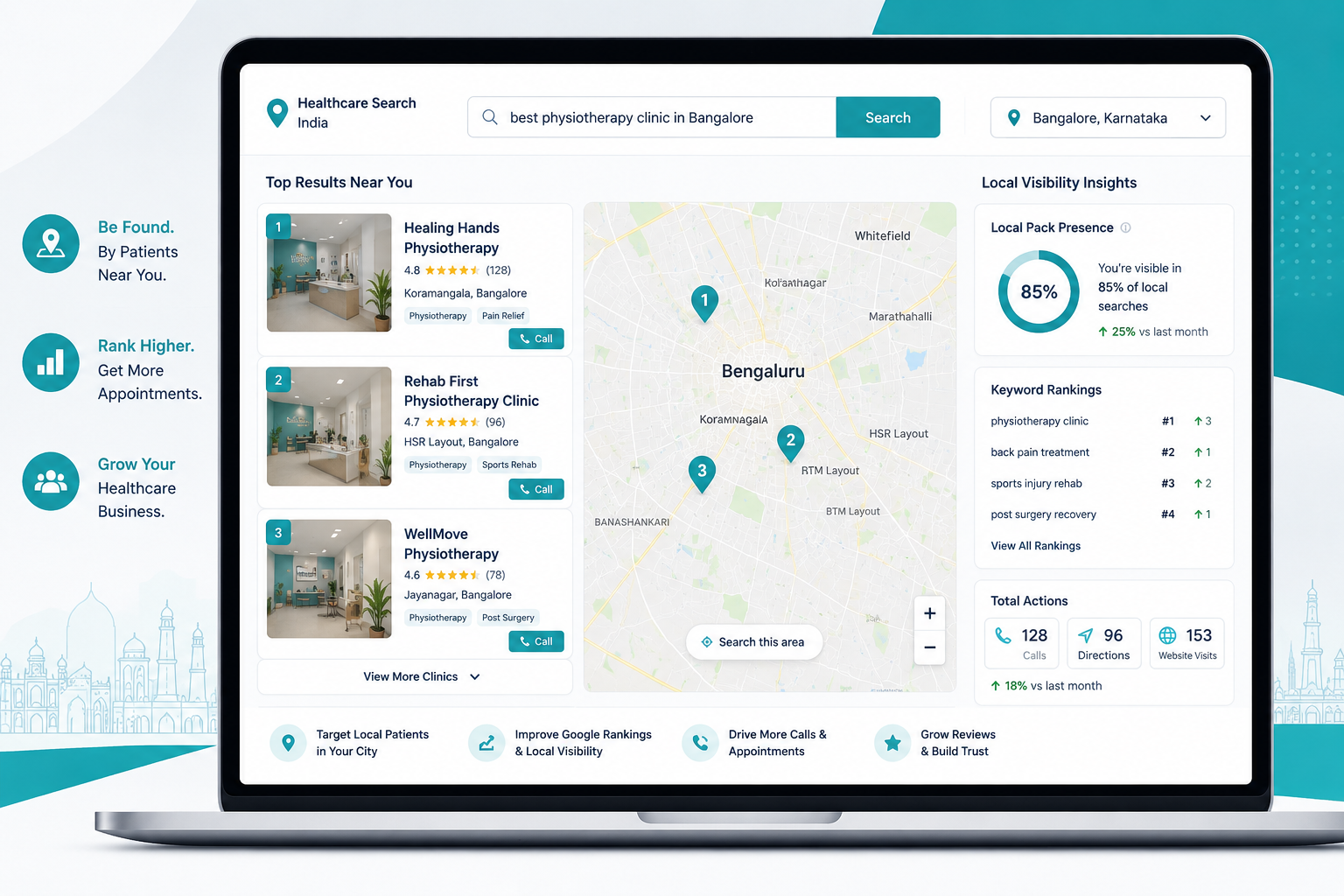
Continue the Same Speech Therapy Journey After the Local Click
A parent looking for a child speech therapist and an adult seeking a speech-language service should not both land on the same generic page with no context. The local page should make the relevant service path easy to find.
- Connect each profile to the correct real practice location
- Link location pages to child and adult services where genuinely offered
- Track calls, directions and appointment actions by location
Pediatric, Medical and Rehabilitation Referrals Can Become Branded Search
A pediatrician, specialist, school professional, rehabilitation provider or other trusted source may introduce the practice. Families and adults often search the therapist or clinic afterward to validate the recommendation.
Prioritize Local Search, Service Clarity, Therapist Trust and Appointment Conversion
The most useful channels stay close to real practice discovery: speech therapist search, local Maps visibility, genuine service research and referral validation.
Healthcare SEO
Build visibility for speech therapist, speech therapy, genuine services and branded practice searches.
Healthcare SEO →Local SEO
Strengthen real practice locations, Maps visibility, calls, directions and local therapist discovery.
Local SEO →Medical Website Design
Separate parent and adult journeys while keeping service, therapist and appointment paths easy to understand.
Medical Website Design →Reputation Management
Support genuine trust across local, branded and referral-driven practice research.
Reputation Management →Analytics + Tracking
Measure appointment enquiries, calls, Maps actions and referral-influenced demand by service and audience path.
Analytics & Tracking →Make Parent and Adult Enquiries Easy to Route
The first contact may come from a parent, an adult client or a caregiver. The website should preserve enough context to route the enquiry without collecting unnecessary personal or clinical details.
Make Age Group, Therapist and Service Fit Clear Before Asking for Contact
A strong speech therapy website should help the visitor understand whether the practice serves the relevant age group, offers the service they are researching and provides a practical location and booking path.
- Clear child, adult or mixed practice positioning
- Substantial genuine speech-language service pages
- Specific therapist and team information
- Accurate location and service availability
- Visible appointment, call and referral paths
- One generic page for parents and adults
- Thin pages for every speech concern or keyword
- Unclear which therapist serves which audience
- Referral information hidden or incomplete
- Forms asking for sensitive history too early
Use Paid Search Around Clear Speech Therapist and Local Intent
Google Ads can support high-intent speech therapist and speech therapy searches when audience, service, location and landing page match. Broad symptom or diagnosis-oriented campaigns should be avoided.
Measure Source, Parent or Adult Intent, Service and Qualified Actions
Speech therapy reporting should distinguish the journey that brought the visitor in while minimizing sensitive health or developmental information in analytics and advertising systems.
A Speech Therapy Marketing Process Built Around Parent and Adult Intent
Review speech therapist, child, adult, branded, local and referral-driven search behavior.
Connect genuine services, therapists and real locations to clear parent and adult journeys.
Strengthen Local SEO, therapist trust, service content and appointment pathways.
Track source, audience intent, service, location, calls and useful appointment actions.
Explore Related Rehabilitation and Healthcare Marketing
Strengthen Speech Therapist Discovery, Trust and Appointment Conversion
Speech Therapy Marketing FAQs
Find the Gaps Between Speech Therapist Search and Qualified Appointments
Tell us about your speech therapy practice and we can review parent and adult search intent, Local SEO, service pages, therapist trust, referral pathways and tracking.