← Emergency Care Marketing Emergency Center Marketing

Emergency Center Marketing That Turns Local Search Into Calls and Directions

Help patients and families find the correct emergency center, verify location and operating information quickly, and move directly to the most useful call or directions action.

Get more patient enquiries Tell us where to reply. We will get back within one business day.

Want to discuss in detail? Book a strategy call →

Urgent Local Search to ActionMaps + hours + directions
Search
Emergency center or nearby care locationThe visitor often begins in Maps, local search, branded search or a recommendation.
Confirm
Location + hours + phoneThe most important information is whether the center is the correct place, where it is and how to reach it.
Act
Call or get directionsHigh-intent visitors should not be forced through a long generic website journey.
Measure
Source + location + qualified actionTrack useful calls and directions while minimizing sensitive health data.
Primary intentEmergency center searchMaps and local results are often the first decision surface.
Primary growth leverLocal visibility + accurate hoursSearch visibility has little value if operational information is unclear or outdated.
Primary actionCall or directionsThe most useful next step should be visible immediately on mobile.
Emergency Center Positioning

Make the Location, Service Scope and Contact Path Easy to Understand

Emergency-center marketing is less about long persuasion and more about being found accurately when someone is searching locally. The page should quickly confirm the center, location, operating information and practical next step.

  • Strengthen emergency center and nearby-location visibility
  • Keep Maps, hours, address and phone information consistent
  • Use real service descriptions without clinical triage content
  • Support referral and branded search validation
  • Track calls, directions and high-intent local actions
Emergency center marketing should not decide whether someone has a medical emergency.

Marketing content can explain the center’s real services and practical access. It should not classify symptoms, provide triage advice or promise clinical outcomes.

Urgent Local Decision Journey

From Nearby Search to the Correct Center in as Few Steps as Possible

A strong emergency center page reduces friction by preserving the visitor’s local intent from the search result through to the call or directions action.

01Nearby search

The visitor searches for an emergency center, nearby care location or a known provider name.

02Verify center details

They check location, hours, phone, directions and factual service information.

03Confirm trust + relevance

Accurate provider information and genuine reputation signals help validate the choice.

04Call or navigate

The site makes the operational action obvious without requiring unnecessary form completion.

Emergency Center Content Priorities

Prioritize Operational Information Over Keyword Volume

Emergency-center pages should be built around the information people actually need to make a local decision, not around dozens of repetitive urgent-search pages.

Location + operating information

Keep the physical address, phone, hours, directions and real service availability accurate and easy to verify.

Genuine emergency-center services

Explain real services and care setting facts without trying to diagnose whether the visitor needs emergency care.

No symptom doorway pages

Avoid building thin pages around every urgent symptom, condition or keyword variation simply to attract traffic.

Trust Under Time Pressure

Accuracy Is the Most Important Trust Signal in a Fast Local Search

Patients and families should not have to wonder whether the hours are current, the address is correct or the phone number reaches the right center. Operational consistency builds trust quickly.

  • Keep center information synchronized across Maps and the website
  • Use real provider and facility information
  • Use genuine reviews and reputation signals only

Professional healthcare setting representing emergency center trust and clear access information
Accurate location, operating and provider information can reduce uncertainty when someone is making a fast local decision.
Emergency Center Search Architecture

Connect Local Search to Real Locations, Useful Service Information and Immediate Actions

Emergency-center websites should stay structurally simple. The most important pages are the ones that help visitors verify the correct center and reach it quickly.

  • Emergency center and branded intent
  • Real center location pages
  • Meaningful service information
  • Phone, hours and directions
  • Referral and administrative contact paths where relevant
Emergency Center Website StructureLocal search to action
Center
Emergency Center OverviewExplain the real care setting, location, contact options and factual service scope.
Location
Address + Hours + DirectionsKeep essential local information prominent and easy to use from mobile.
Services
Meaningful Service InformationUse factual pages only for genuine services without symptom-based diagnosis or triage advice.
Trust
Provider + Reputation InformationHelp patients and families confirm the organization behind the location.
Action
Call / DirectionsKeep immediate operational actions clear and accessible.
Local SEO for Emergency Centers

Maps Visibility Only Works When Hours, Location and Directions Are Right

For emergency-center search, Local SEO is not only a ranking task. It is a data-quality task. The listing, location page and contact information should agree everywhere.
Google Business ProfileKeep center name, address, phone, hours, category and genuine services accurate.
Real location pagesUse substantial pages for actual emergency centers rather than thin city or neighborhood variants.
Operating informationPublish hours or availability details only when the organization can keep them current.
Calls + directionsMake mobile call and navigation actions prominent and easy to use.
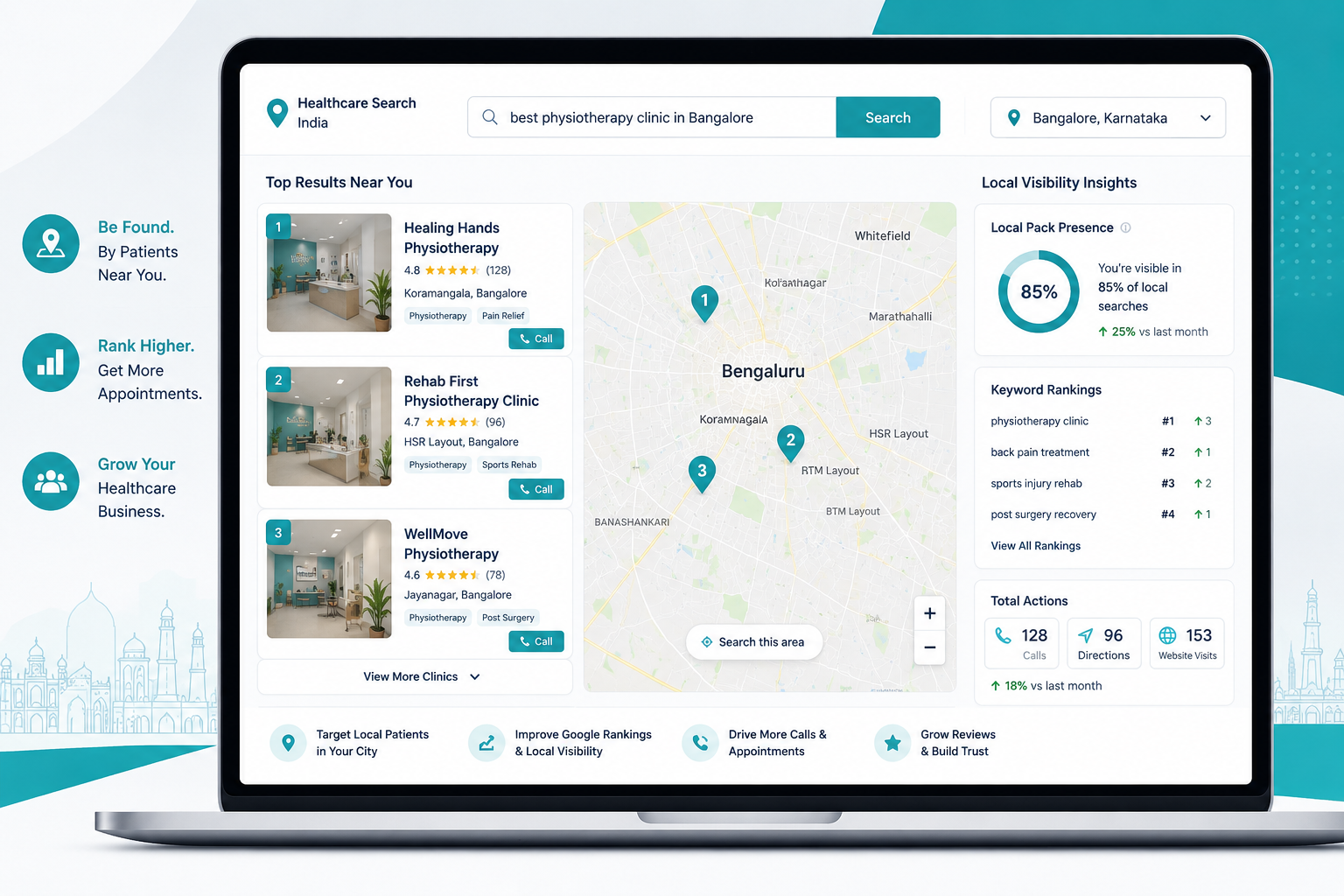
Local healthcare search and map interface for emergency center discovery and directions
The most useful local experience connects the search result directly to accurate center details, calls and directions.
Maps-to-Action Match

Do Not Make Local Visitors Search for the Same Information Twice

A visitor who already selected your emergency center from Maps should immediately recognize the location and see the phone and directions options they need.

  • Connect each local profile to the correct real center page
  • Keep address, hours and phone near the top of the page
  • Track calls and directions by location
Call + Directions Conversion

Design the Mobile Experience Around Immediate Local Actions

Emergency-center conversion should usually be simpler than a standard healthcare lead form. Calls and directions deserve prominent placement, while general forms are better suited to non-urgent business enquiries.

Tap-to-callKeep the correct phone number prominent where direct contact is an intended operational action.
DirectionsMake navigation to the correct center simple from Maps and the location page.
General enquiryUse forms for appropriate non-urgent marketing or administrative enquiries rather than immediate clinical decisions.
Privacy-aware formsDo not collect detailed symptoms, diagnoses, medical history or other unnecessary clinical information in general marketing forms.
Referral + Branded Search

Recommendations Still Need Accurate Digital Validation

A healthcare professional, family member or known local brand may influence the choice of emergency center. Search then becomes the verification step for location, phone and operating information.

Branded searchMake sure the correct center location and phone are easy to find when someone searches the provider by name.
Referral validationKeep provider and center information consistent with what referral sources communicate.
ReputationUse genuine reviews and factual center information without unsupported quality claims.
AttributionWhere practical, distinguish branded, local and referral-influenced discovery without collecting unnecessary health details.
Emergency Center Marketing Priorities

Focus on the Channels Closest to Local Discovery and Action

Emergency centers usually gain more from accurate local visibility, website clarity, reputation and tracking than from forcing broad awareness channels into the strategy.

Local SEO

Strengthen Maps visibility, real center pages, hours, calls and directions.

Local SEO →

Healthcare SEO

Support emergency-center, branded and genuine service discovery without symptom-based doorway content.

Healthcare SEO →

Medical Website Design

Build a mobile-first experience around location verification, phone access and directions.

Medical Website Design →

Reputation Management

Support genuine trust when patients and families validate a local center or recommendation.

Reputation Management →

Analytics + Tracking

Measure calls, directions, branded search and other useful local actions by source and location.

Analytics & Tracking →
Website Conversion Quality

Emergency Center Pages Should Remove Uncertainty Before the Click to Call

The best local page answers a short list of practical questions quickly: is this the right center, where is it, when is it operating, how do I get there and how do I call?

Stronger Emergency Center Page
  • Clear center identity and location
  • Current hours and phone information
  • Directions visible on mobile
  • Factual service information
  • Genuine trust and provider signals
Common Local Search Friction
  • Outdated hours or phone number
  • Generic homepage instead of the correct center
  • Directions hidden below long content
  • Symptom pages that imply diagnosis or triage
  • Long forms blocking simple operational actions
Selective Google Ads

Use Paid Search Only for Clear Emergency Center and Location Intent

Paid search can support local center discovery when the query, location and landing page clearly match. Avoid fear-based messaging, symptom diagnosis and broad urgency claims.

Center intentPrioritize people clearly searching for an emergency center or nearby location.
Location matchUse realistic geographic targeting around actual center locations.
Landing-page matchSend users directly to the correct real center page with hours, phone and directions.
Conversion qualityJudge campaigns by useful calls and location actions rather than clicks alone.
Call + Directions Tracking

Measure Source, Location and Qualified Local Actions

Emergency-center reporting should connect organic, Maps, branded, referral and selected paid demand to useful actions while minimizing sensitive health information in marketing systems.

SourceWhere discovery startedOrganic search, Maps, branded search, referral influence or selected Google Ads.
LocationWhich center was researchedTrack real center-level demand instead of combining unrelated locations.
ActionWhat the visitor didPhone call, directions request or appropriate non-urgent enquiry.
QualityWhether the action was usefulMeasure meaningful operational actions without collecting unnecessary clinical detail.
Our Process

An Emergency Center Marketing Process Built Around Local Accuracy

01Audit Local Discovery

Review Maps, emergency-center, branded and location-level search behavior.

02Verify Center Information

Align hours, address, phone, categories, real services and website location pages.

03Improve Calls + Directions

Strengthen mobile actions, local-page clarity and Maps-to-site continuity.

04Measure Qualified Actions

Track calls, directions and useful center-level actions by source and location.

Related HealthDigital Services

Strengthen Emergency Center Visibility, Accuracy and Local Conversion

FAQs

Emergency Center Marketing FAQs

Emergency center marketing focuses on local discovery, accurate location and operating information, Maps visibility, calls, directions, reputation and qualified action tracking.
People use local search to make fast decisions. If hours differ between Maps and the website, trust and conversion can suffer, so operational information should be kept current across every surface.
They are often central to the journey because the visitor is trying to find the correct nearby center and navigate there. Maps visibility should connect directly to accurate center information.
Not as a broad keyword strategy. Marketing pages should focus on real center services and access rather than classifying symptoms or determining whether someone has a medical emergency.
For high-intent local visitors, call and directions actions are often more useful than a long form. General forms can remain available for appropriate non-urgent enquiries.
They can support clear center and local intent when the geographic targeting and landing page match. Campaigns should avoid fear-based language, diagnosis and broad symptom targeting.
Track local and organic visibility, Maps actions, branded search, calls, directions and useful center-level actions by source and location while minimizing sensitive health information.
Emergency Center Marketing Review

Find the Gaps Between Local Search and Calls or Directions

Tell us about your emergency center and we can review Maps visibility, location accuracy, hours, website clarity, call and directions conversion, reputation and tracking.

✓ Review emergency center and local search visibility ✓ Check hours, phone, address and Maps consistency ✓ Review call, directions and location-page pathways ✓ Check qualified action tracking by source and location
Get more patient enquiries Tell us where to reply. We will get back within one business day.

Want to discuss in detail? Book a strategy call →

Get Free Website Audit Free Audit