
Ambulance Service Marketing for Local Calls and Institutional Leads
Help families, patients, hospitals, facilities and care coordinators find your ambulance service, understand the areas and transport services you genuinely cover, and reach the right call or business enquiry path quickly.
For ambulance-provider marketing, growth, partnership and institutional lead enquiries.
Make the Service Model, Coverage Area and Contact Route Clear
Ambulance providers can receive immediate local calls, scheduled transport demand and institutional enquiries. Marketing works best when each audience can quickly identify whether the provider serves the required geography and service category.
- Clarify real ambulance and medical transport services
- Show factual service areas and location coverage
- Separate consumer call paths from institutional enquiries
- Support hospital, facility and care-coordinator relationships
- Track qualified leads by service type and geography
Marketing pages can describe genuine transport services, coverage and contact processes. They should not determine clinical urgency, recommend a transport level based on symptoms or promise medical outcomes.
Consumer Calls and Institutional Leads Should Not Share the Same Funnel
A family trying to reach an ambulance provider quickly has a different decision process from a hospital, facility or care coordinator evaluating an ongoing transport relationship.
The goal is fast service-area confirmation and direct operational contact.
- Search ambulance or medical transport service
- Confirm real service area and service category
- Verify provider and practical contact information
- Call or make the appropriate transport enquiry
The goal is to understand whether the ambulance provider fits a recurring or coordinated transport requirement.
- Discover provider through search, referral or outreach
- Evaluate coverage area, genuine services and operating model
- Confirm coordination and institutional contact process
- Submit a partnership or service enquiry
Turn Service-Area Coverage Into Useful Search Information
Ambulance providers often need to communicate where they operate, but this should not become a mass of thin city pages. Use real service-area information that helps people and institutions understand operational reach.
Explain the provider’s genuine geographic coverage clearly, including relevant bases or service locations where they actually exist.
Where services differ by geography, make those differences factual and easy to verify rather than implying universal coverage.
Use standalone location or service-area pages only where there is real operational relevance and substantial unique information.
Operational Clarity Builds Trust Faster Than Generic Claims
Families and institutional buyers need specific information about the provider, real services, service areas, contact routes and coordination process. Generic quality statements are less useful than accurate operational detail.
- Keep service-area, phone and provider information current
- Explain real transport categories and operational contact paths
- Use genuine reputation and organization information only

Connect Search Intent to Services, Coverage and the Correct Lead Path
Ambulance websites should not send every visitor into one generic form. The structure should distinguish urgent local contact, scheduled transport research and institutional evaluation.
- Ambulance provider and branded search intent
- Meaningful ambulance and transport-service pages
- Real service-area information
- Family and patient call pathways
- Hospital, facility and partner enquiry pathways
Local Visibility Must Match the Real Service Area
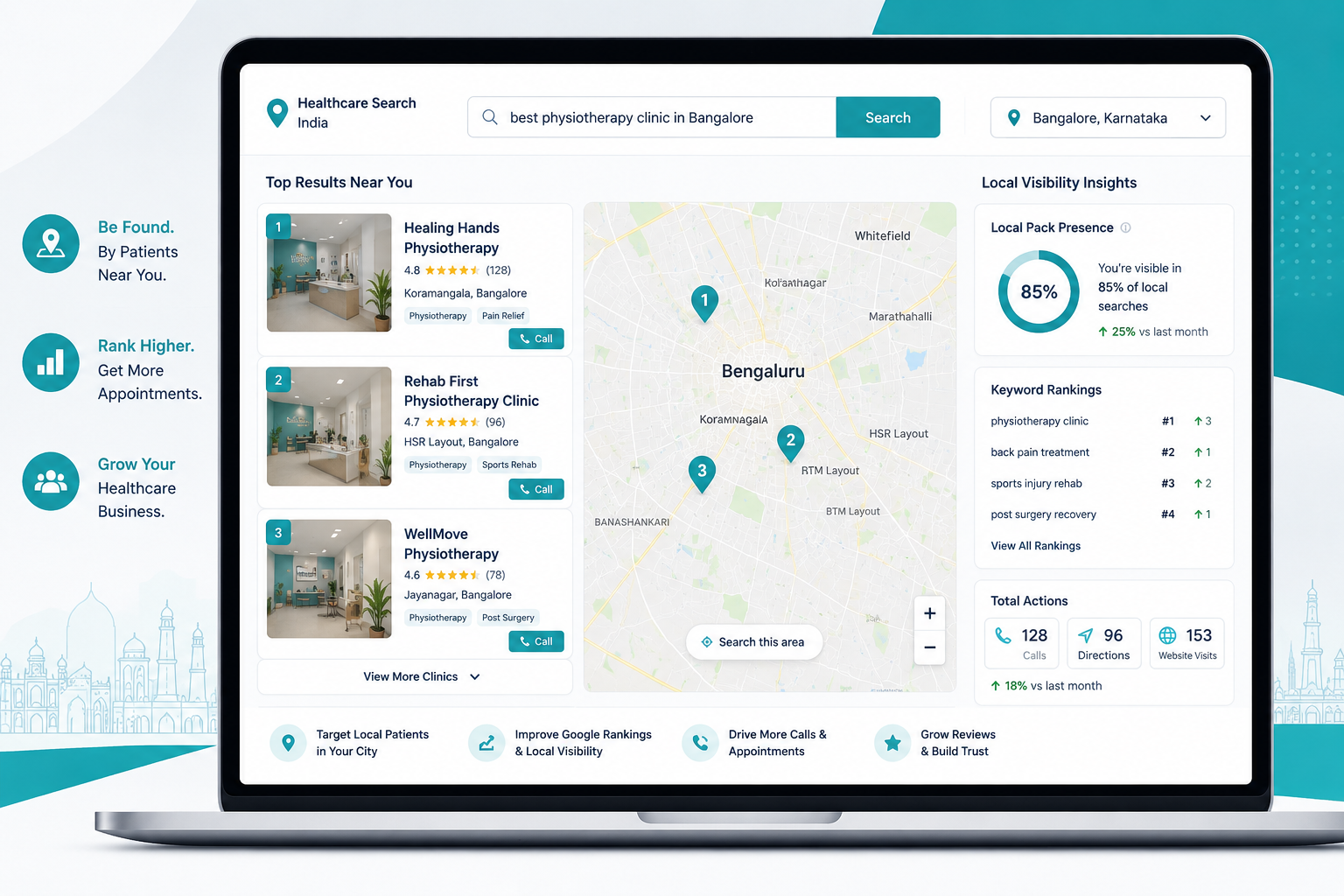
Maps and local search can support ambulance-service discovery, but the listing should reflect real operational locations and coverage. Do not create misleading local signals for areas without a genuine provider presence.
Do Not Lose High-Intent Searchers After the Local Click
A visitor who already selected an ambulance provider from local search should not have to hunt for coverage, phone details or the correct service route on the website.
- Connect local listings to the correct provider or real location page
- Keep service area and phone information easy to confirm
- Track local calls separately from institutional enquiries
Hospitals and Facilities Need a Different Reason to Contact You
Institutional leads are not simply larger versions of consumer calls. Hospitals, care facilities, discharge teams and coordinators need to evaluate operational fit, service coverage and the relationship process.
Search Often Validates a Relationship That Started Offline
Hospitals, facilities, clinics, care coordinators and community providers may already know the ambulance company through referrals or outreach. Strong branded search helps them verify the organization and find the correct business contact.
- Clear ambulance provider and service positioning
- Factual service-area and transport information
- Dedicated institutional contact path
- Strong branded provider pages
- Referral source and account-interest tracking
- Only a consumer-facing call number
- No clear coverage or service information
- Generic form with no business context
- Professional buyers forced through patient copy
- Institutional leads mixed into consumer reporting
Focus on Local Demand, Service-Area Search and Institutional Acquisition
The useful channel mix is different from a standard clinic. Local SEO, service-area SEO, website conversion, lead generation and tracking sit closest to the actual ambulance-provider business model.
Local SEO
Strengthen real locations, local visibility, provider information and call conversion.
Local SEO →Healthcare SEO
Build visibility for ambulance provider, transport-service, service-area and branded searches.
Healthcare SEO →Healthcare Lead Generation
Create institutional acquisition paths for hospitals, facilities and professional transport buyers.
Lead Generation →Medical Website Design
Separate urgent calls, scheduled transport research and institutional enquiries into clear mobile-first pathways.
Medical Website Design →Analytics + Tracking
Measure calls and institutional leads separately by service, source and geography.
Analytics & Tracking →Separate Immediate Calls From Scheduled and Institutional Enquiries
The website should make the right action obvious for each visitor. A family looking for transport, a hospital coordinator and a facility evaluating a provider should not all be routed through the same generic form.
Use Paid Search Around Clear Ambulance and Transport Intent
Google Ads can support high-intent local and scheduled transport search where the provider genuinely serves the geography and the landing page matches the service. Institutional acquisition may also use targeted campaigns where appropriate.
Measure Source, Service Area, Lead Type and Qualified Outcome
Ambulance-provider reporting should distinguish immediate calls from institutional opportunities so channel performance reflects the actual business model.
An Ambulance Marketing Process Built Around Coverage and Lead Type
Review ambulance, transport-service, local, service-area, branded and institutional search paths.
Connect genuine transport categories and real operational coverage to purposeful pages.
Improve local call conversion while creating a dedicated institutional acquisition path.
Track consumer calls and institutional opportunities separately by source, area and service intent.
Explore Related Healthcare Marketing Categories
Strengthen Ambulance Discovery, Call Conversion and Institutional Acquisition
Ambulance Service Marketing FAQs
Find the Gaps Between Service-Area Search, Calls and Institutional Leads
Tell us about your ambulance business and we can review local visibility, service-area architecture, call conversion, institutional acquisition and lead tracking. This is a marketing and business-growth enquiry, not an ambulance dispatch form.
For ambulance-provider marketing, growth, partnership and institutional lead enquiries.