Emergency Care Marketing Built for Local Discovery, Calls and Fast Decisions
Help patients, families, referral partners and transport buyers find the correct emergency or transport provider, verify accurate location and service information, and reach the right call, directions or enquiry path quickly.
Marketing Must Make the Provider Type and Next Action Immediately Clear
Emergency care and medical transport providers serve different operational needs. The website should clearly explain what the organization actually provides, where it operates and how someone should make contact without using fear-based messaging.
- Clarify emergency care, transport and service-area positioning
- Keep location, hours and phone information current
- Use real service pages rather than broad generic claims
- Support professional referrals and partner discovery
- Track high-intent calls, directions and qualified enquiries
Marketing content should explain provider services and practical access. It should not determine whether a person’s condition is an emergency, recommend clinical action or promise treatment outcomes.
Emergency Care and Transport Providers Need Different Conversion Paths
A patient or family member looking for a nearby emergency provider is not making the same decision as a hospital, facility, coordinator or family arranging medical transport.
The visitor is usually trying to verify the correct location and reach the provider quickly. The site should prioritize operational clarity over long educational journeys.
- Nearby provider and Maps visibility
- Accurate address, phone and operating information
- Clear directions and call actions
- Real service scope without clinical self-assessment
The buyer may be a family member, discharge planner, facility, hospital or other professional source comparing coverage area, service model and contact process.
- Service-area and transport-type clarity
- Professional partner and referral information
- Direct call or service enquiry
- Qualified lead tracking by source and service type
Build Visibility Around Real Emergency and Transport Services
Service pages should reflect genuine operational categories that people or professional buyers actually search, not a large keyword library built around symptoms.
Use substantial pages for real care locations with accurate address, hours, phone, directions and factual service information.
Create pages for genuine transport categories and service areas only when they are actually provided and can be explained clearly.
Avoid building thin pages for every urgent symptom or condition. Marketing content should not attempt to classify medical urgency from search behavior.
Accurate Information Is One of the Strongest Trust Signals
When someone is making a fast decision, outdated hours, unclear directions or generic service descriptions create friction. Trust begins with reliable operational information.
- Keep phone, address and operating information current
- Show genuine provider and service details
- Use real reputation signals without invented proof

Connect Immediate Search Intent to the Correct Provider, Location and Action
The site structure should be built around real locations, genuine services and operational contact paths instead of repeating similar pages for every urgent keyword variation.
- Emergency provider and branded intent
- Real location pages
- Genuine transport and emergency service categories
- Service-area information where relevant
- Call, directions, referral and enquiry pathways
Maps Visibility Matters Most When It Leads to Accurate Action
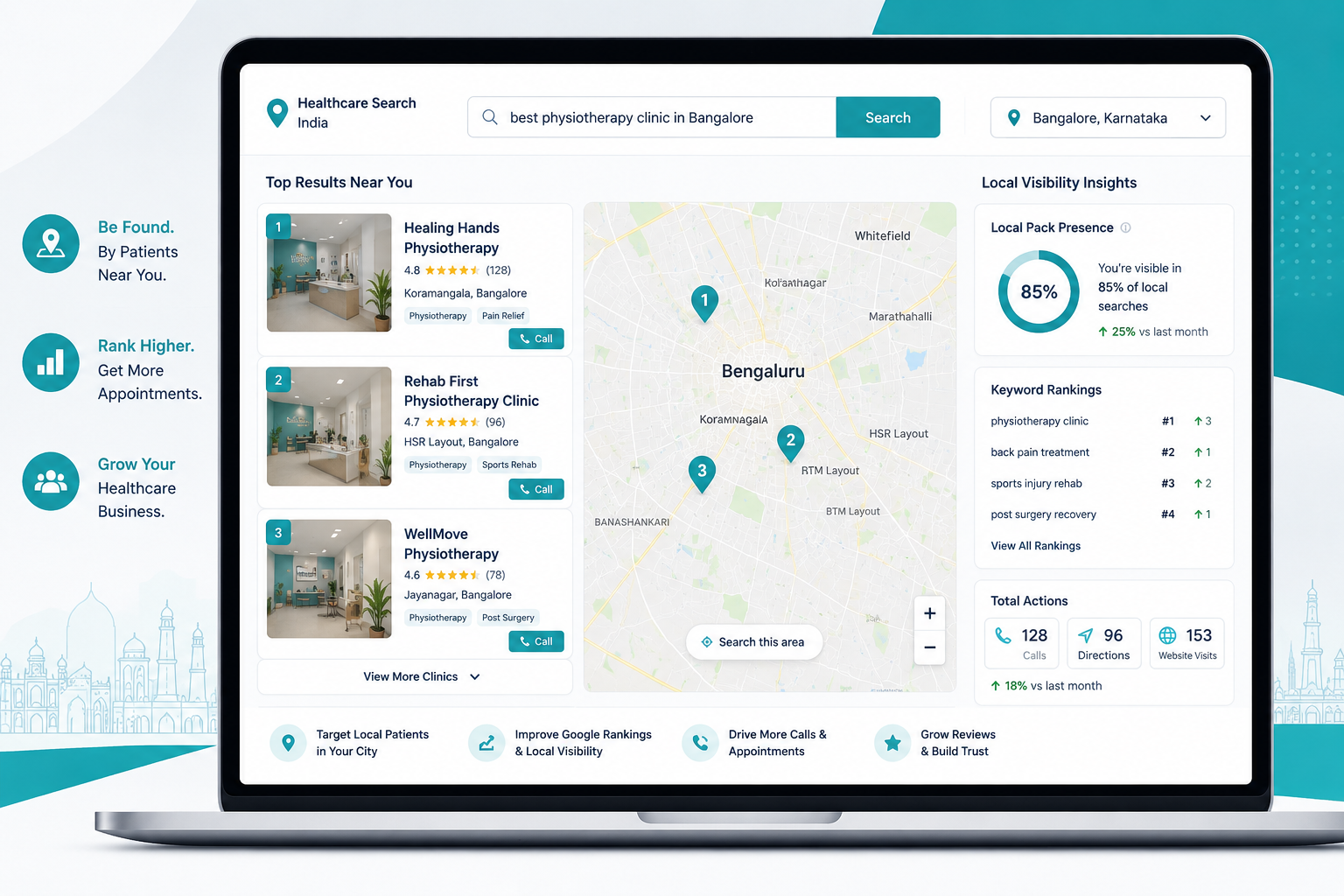
Emergency and time-sensitive search is often heavily local. Strong Maps visibility is useful only when the listing accurately reflects the provider, location, phone, operating information and genuine service scope.
Do Not Send High-Intent Local Visitors Through a Generic Website Journey
Someone arriving from Maps should quickly confirm the location or transport provider they selected and reach the correct call, directions or enquiry action without searching the site again.
- Connect each local profile to the correct real location page
- Keep phone, directions and service information close to the top
- Track local actions by provider and location
Transport and Emergency Providers May Depend on Professional Relationships as Well as Search
Hospitals, facilities, care coordinators, physicians, community organizations and family decision-makers can influence demand. The digital presence should support these relationships with clear operational information.
Prioritize the Channels Closest to Immediate or Operational Intent
Emergency and transport providers usually benefit more from accurate local visibility, service pages, call conversion and measurement than from forcing every possible marketing channel into the mix.
Local SEO
Strengthen Maps visibility, real locations, phone actions, directions and service-area discovery.
Local SEO →Healthcare SEO
Build visibility for provider, transport, genuine service and branded searches.
Healthcare SEO →Medical Website Design
Organize locations, services, partner information and urgent contact paths into a clear mobile-first experience.
Medical Website Design →Lead Generation
Support qualified service or transport enquiries where the business model includes scheduled or partner-driven demand.
Healthcare Lead Generation →Analytics + Tracking
Measure calls, directions, service enquiries and qualified partner actions by source and location.
Analytics & Tracking →Make the Operational Next Step Obvious on Mobile
The website should never force immediate-intent visitors through a long form if a direct call or directions action is more appropriate. Transport and partner enquiries can use a more detailed contact path when necessary.
Emergency Provider Websites Should Remove Friction, Not Add It
A strong emergency or transport website helps users confirm who the provider is, what it actually does, where it operates and how to make the correct operational contact.
- Clear provider and service positioning
- Accurate real-location and service-area information
- Phone and directions actions near the top
- Meaningful service pages with practical operational details
- Separate partner or transport enquiry paths where needed
- Generic emergency claims with unclear provider type
- Outdated hours, address or phone details
- Symptom-heavy pages that imply triage or diagnosis
- Urgent visitors sent through long generic forms
- Transport buyers unable to find service-area or partner information
Use Paid Search Only Where Immediate Intent and Provider Fit Are Clear
Paid search can support genuine local provider or transport-service demand when the location, service and landing page match. Campaigns should avoid fear-based language, diagnostic claims and broad symptom targeting.
Measure Source, Service Intent, Location and Qualified Operational Actions
Emergency marketing measurement should connect organic, Maps, referral and selected paid demand to useful actions while minimizing sensitive health information in analytics and advertising systems.
An Emergency Care Marketing Process Built Around Immediate and Operational Intent
Review Maps, provider, service, location, transport, branded and referral-driven demand.
Connect genuine emergency or transport services to real locations and service areas.
Strengthen Local SEO, operational clarity, partner pathways and mobile contact actions.
Track calls, directions, service enquiries and partner contacts by source and intent.
Explore Related Healthcare Marketing Categories
Strengthen Local Discovery, Operational Clarity and Qualified Actions
Emergency Care Marketing FAQs
Find the Gaps Between Local Search and Qualified Operational Actions
Tell us about your emergency care or transport organization and we can review positioning, Local SEO, service pages, calls, directions, partner pathways and tracking.